3 Ways to Keep Your Brand Aligned, Authentic, and Ahead
Strong brands aren’t built overnight—and they don’t stay strong by standing still.
They’re built on a foundation of deep understanding that helps them stay connected and relevant as their audiences, markets, and culture evolve. The brands that thrive are the ones that continually listen and evolve based on their learnings.
Here are three simple but powerful ways to help your brand stay relevant and trusted, no matter what’s shifting around you.
1) Listen deeply.
It’s easy to assume we already know what our customers think—but assumptions are often where misalignment begins.
Listening deeply means creating consistent ways to understand how your audiences’ priorities, values, and language are evolving.
- What are customers talking about now that they weren’t a year ago?
- How are they describing their challenges? Are you using the same language?
- What’s shifting in their values, expectations, or aspirations?
Tools like social listening, surveys, and interviews can help. But it’s the mindset, or “why” behind it that matters most. When listening becomes an ongoing practice, you’re more likely to notice subtle shifts before they become major disconnects.
Nike’s Strategic Reintroduction of “Just Do It.” Reflects Deep Audience Understanding
A great example of this is Nike’s strategic reintroduction of “Just Do It.” to the next generation of athletes through its “Why Do It?” campaign. By asking “Why Do It?”, Nike acknowledges the doubt and hesitation that today’s younger generations feel. It invites the audience into a conversation about purpose, resilience, and choice, rather than just demanding action.1 It demonstrates how a legacy brand can evolve without abandoning decades of equity.
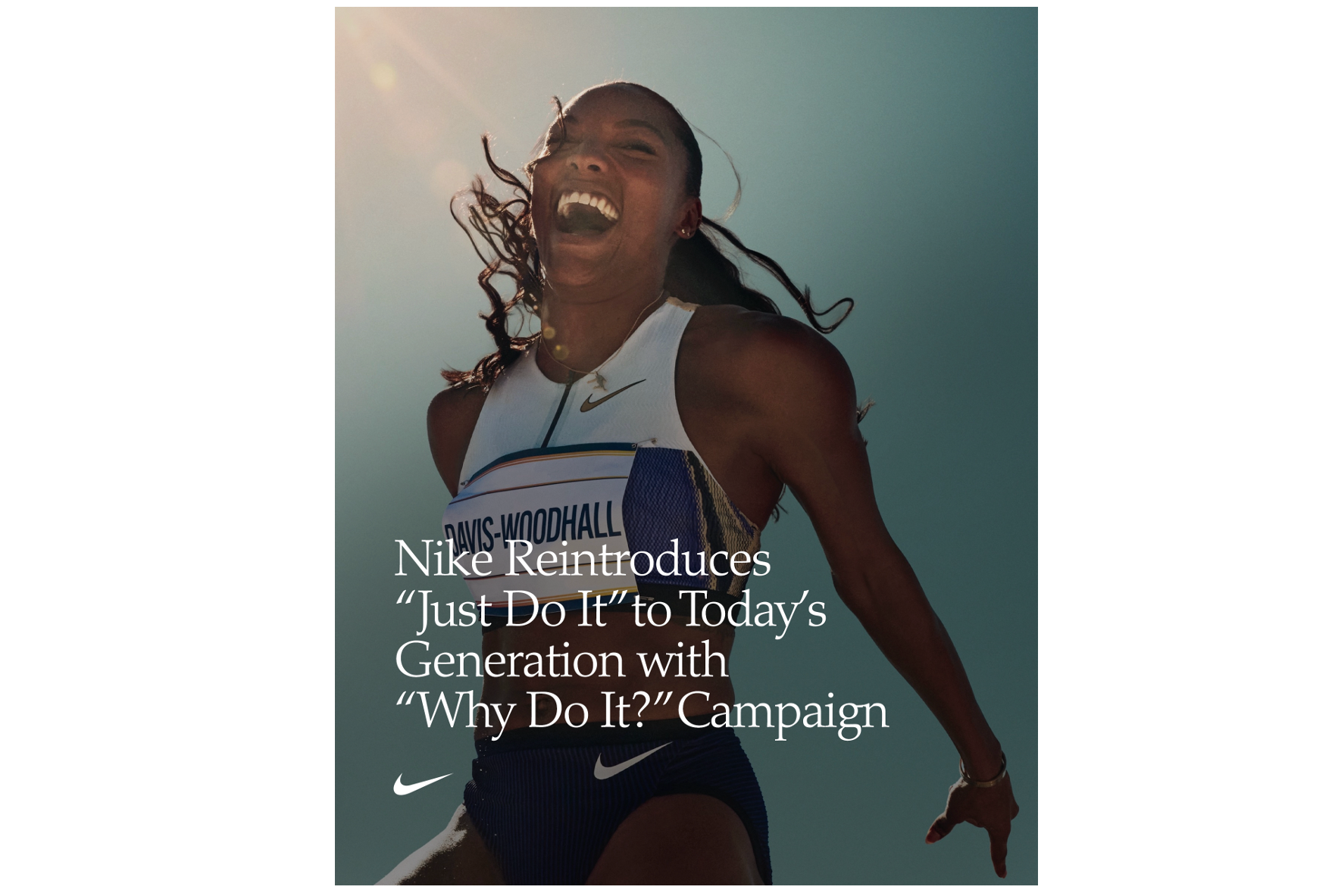
(Image Source: Nike.com)
2) Align the customer experience with promises.
Your brand drives growth only when the story you’re telling matches the reality people experience—whether that’s internally or externally.
For internal audiences, if what you express publicly doesn’t align with how your team operates every day, people notice. For customers, if the product or service experience doesn’t reflect the brand promise and their expectations, you may not get a second chance.
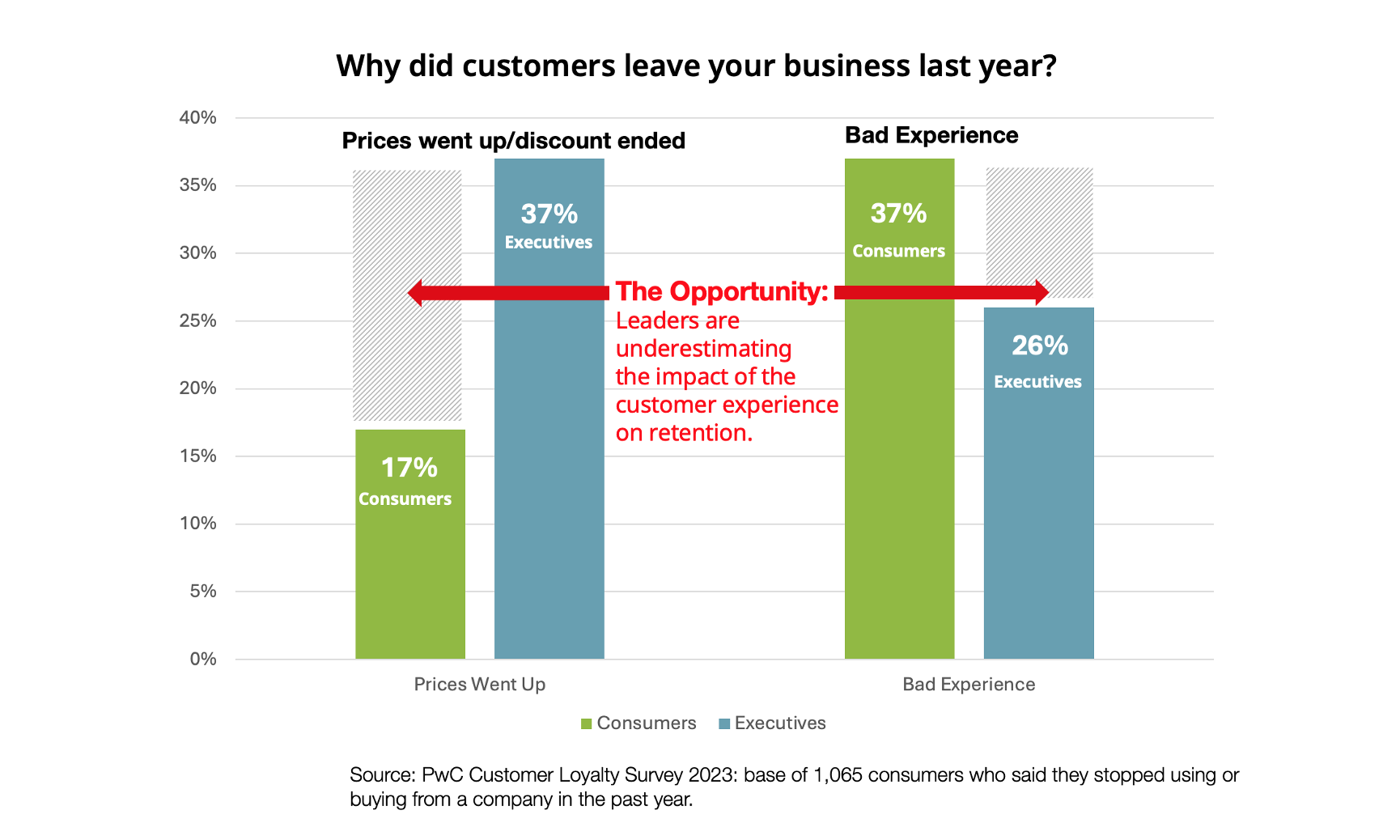
While that might seem logical, PwC’s 2023 Consumer Loyalty Survey reveals that leaders are underestimating the impact of the customer experience on retention. The results show that only 26% of executives cite customer experience as the top reason customers leave—yet 37% of customers say they leave due to a poor product or service experience. 2 This points to a significant misalignment, and an opportunity.
Consumer loyalty survey shows leaders are underestimating the impact of customer experience on retention.
Building alignment means making sure your people, which includes everyone from leadership to the front line, understand and deliver on what your brand stands for. When employees feel connected to the brand’s purpose, customers are more likely to feel that connection, too.
Patagonia. Customer experience alignment in action.
A great example of alignment in business, brand, and customer experience is Patagonia. Patagonia has consistently aligned its external purpose—environmental responsibility—with its internal operations and customer experience. In 2022, founder Yvon Chouinard announced that ownership of the company was transferred to a trust and nonprofit dedicated to protecting the planet.3
The announcement reinforced what the brand had lived operationally for years through ethical sourcing, employee activism support, and product guarantees. It wasn’t a marketing campaign. It was an alignment of purpose and practice that continues to resonate deeply with loyal customers and employees.
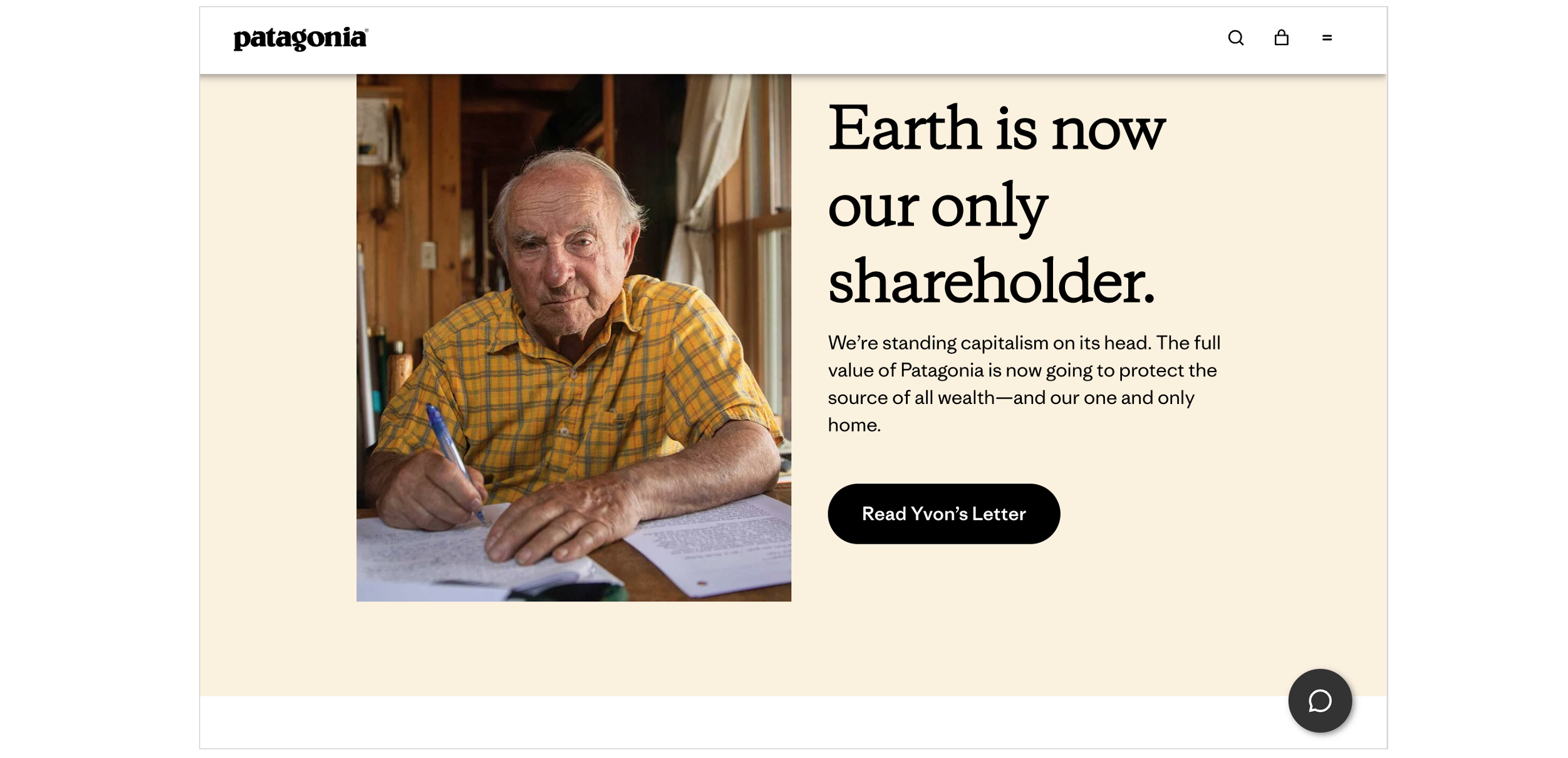
(Image Source: Patagonia.com)
3) Respond visibly.
Insight only matters if you act on it. Once you understand what’s changing for your audiences, and you’ve made whatever shifts you need to make internally, then it’s time to show that awareness in tangible ways—through messaging, visuals, experiences, or offerings.
This doesn’t necessarily mean reinventing your brand identity, though it can. It means making the changes that need to be made based on your insights, and communicating what you’re doing and why in whatever way is most appropriate.
Domino’s: A lesson in aligning business strategy, brand strategy + operations.
A great example of this is the Domino’s pizza turnaround back in 2009-2011.
The success of Domino’s turnaround was built on radical transparency, honesty, and humility. Shifts in product design (or in Domino’s case, its recipe), tone, design, or language can demonstrate that your brand is paying attention—that you see your audiences and understand what they want. Domino’s didn’t try to rebrand or rely on a marketing campaign; they got real, sharing how customers really felt about their pizzas. They fixed the problems. And it was rewarded. Same-store sales growth increased 10.4 percent between 2009-2010.4 The stock price speaks for itself. In December 2009, before the turnaround, Domino’s stock was trading at $8.50 per share. In 2025, the stock is trading at $420 per share.5
Impact on Stock Price
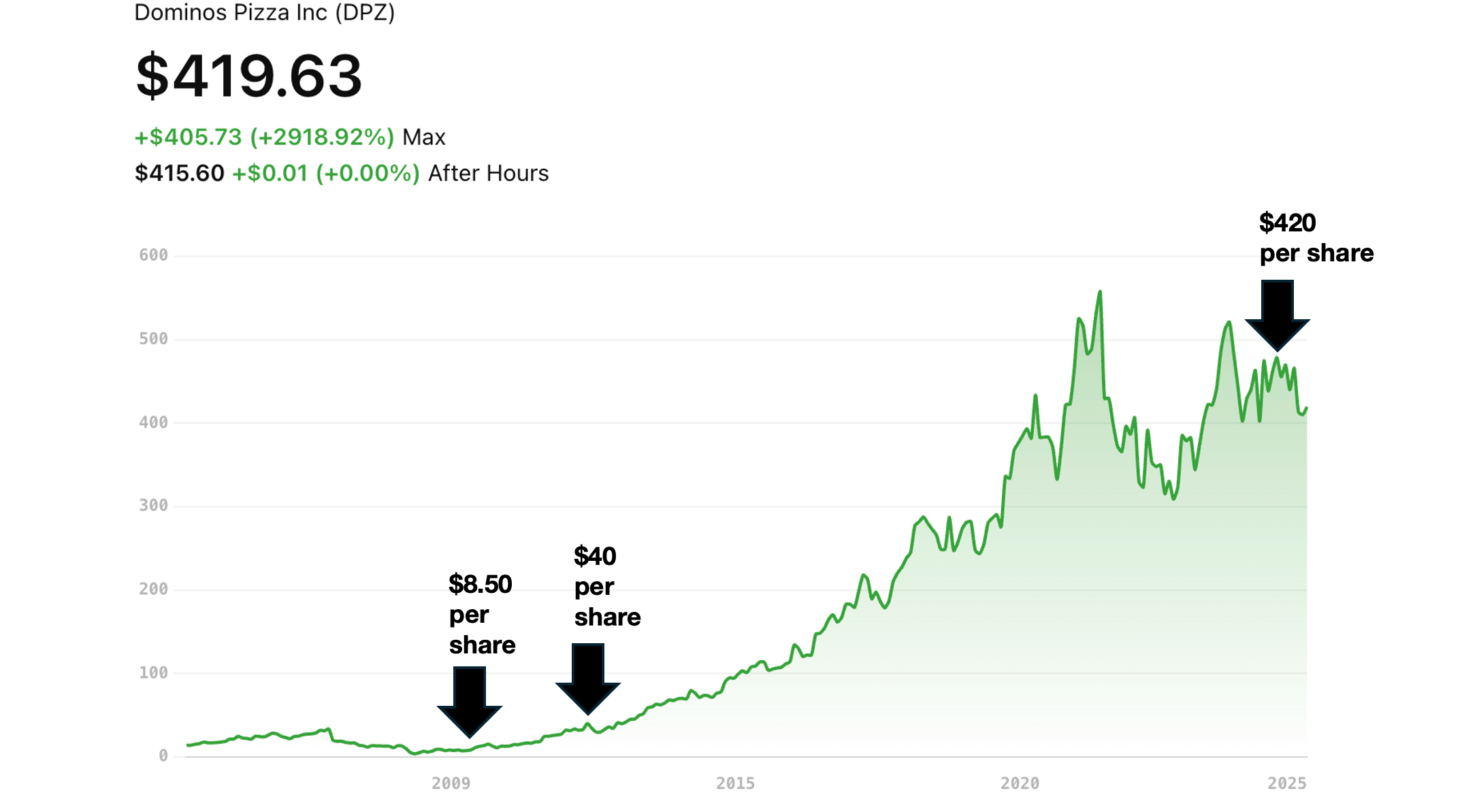
Source: Yahoo Finance
Interestingly, Domino’s just launched its first brand refresh in over a decade. In its press release, Dominos’ executive vice president – global chief marketing officer, Kate Trumbell states that, “Most companies rebrand themselves when they’re struggling, but after years of category-defying growth, this refresh is about continuing to push to be the best version of ourselves. It’s vibrant, it’s bold, and it’s fun.”6
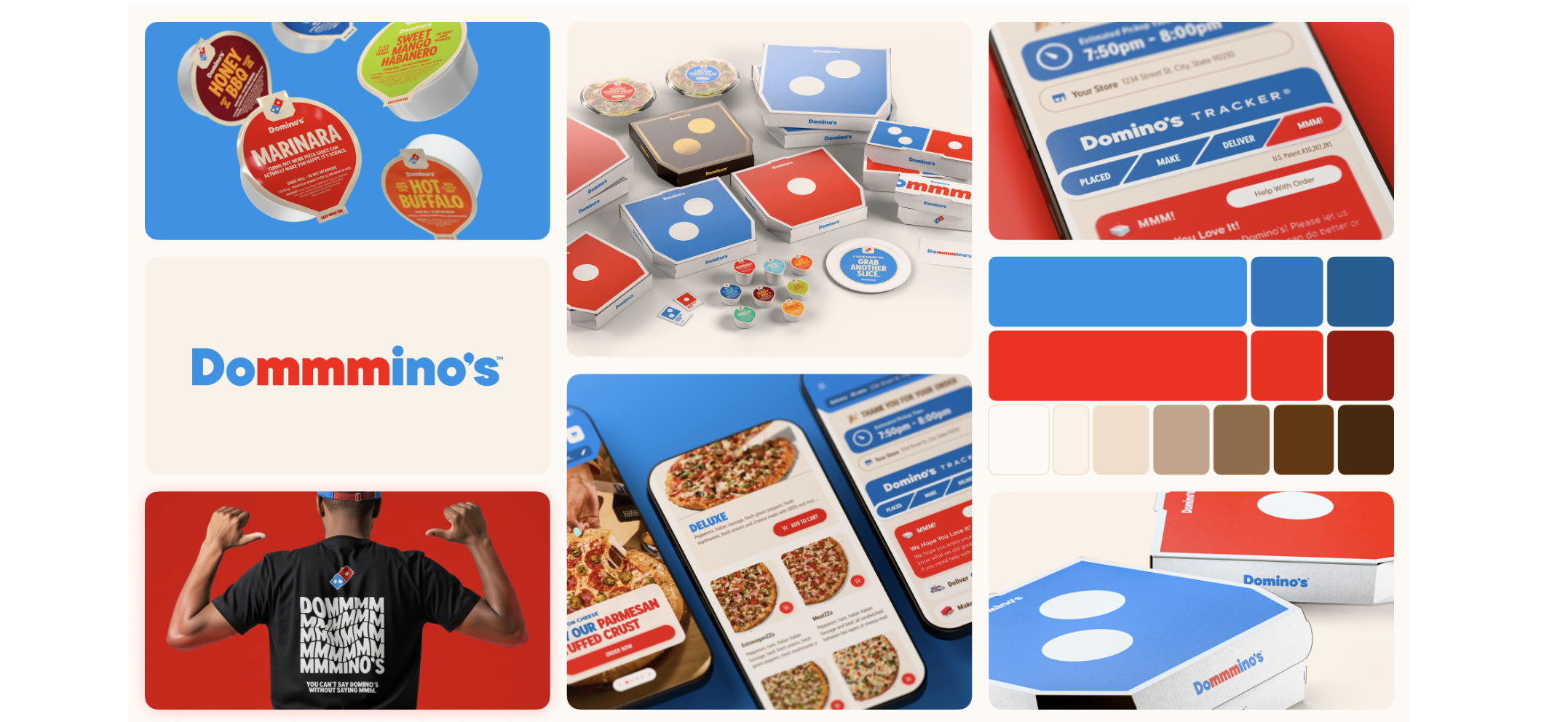
(Image Source: Domino's Pizza, dominos.com)
Brand-Building Today Requires Continuous Evolution
The kind of brand strength that drives growth doesn’t come from one campaign, adding a tagline or even a stellar brand refresh. It’s the result of many intentional choices over time that show you’re listening, understand your customer, and are committed to delivering the experience they expect from your brand.
Listening. Aligning. Responding. That’s what builds trust over time. And it’s important to remember that brand-building is a cycle of continuous improvement and evolution.
Sources:
1 Nike.com, Nike Reintroduces “Just Do It” to Today’s Generation with “Why Do It?” Campaign, https://about.nike.com/en/newsroom/releases/nike-why-do-it-campaign
2 PWC.com, Converting disconnects into loyalty opportunities, PwC Customer Loyalty Executive Survey 2023, https://www.pwc.com/us/en/services/consulting/business-transformation/library/building-customer-loyalty-guide.html
3 Patagonia.com, “Earth is now our only shareholder.” September 14, 2022, https://www.patagonia.com/ownership/
4 Jeff Haden, “10 Years Ago, ‘Cardboard’ Pizza Almost Killed Domino’s. Then, Domino’s Did Something Brilliant. How Domino’s used a combination of transparency, strategy, and counterintuitive marketing to reinvent the company.” Inc, January 14, 2021, https://www.inc.com/jeff-haden/10-years-ago-cardboard-pizza-almost-killed-dominos-then-dominos-did-something-brilliant.html
5 Yahoo Finance, “Domino’s Pizza (DPZ),” https://finance.yahoo.com/quote/DPZ/
6 Dominos.com, “Domino’s® New Craveable Brand Refresh Makes You Say “MMM”,” October 8, 2025, https://ir.dominos.com/news-releases/news-release-details/dominosr-new-craveable-brand-refresh-makes-you-say-mmm